
DUI checkpoints are a common law enforcement tool across Florida, including Fort Pierce. These roadside stops are designed to identify impaired drivers, but for many motorists, they raise serious questions about constitutional rights, lawful police conduct, and what to do if a stop leads to an arrest. Understanding how DUI checkpoints work, what officers can and cannot do, and which legal options may be available afterward can make a meaningful difference in protecting future outcomes.
For drivers navigating these situations, learning about Florida DUI checkpoint laws is not just helpful, it is essential. This guide explains key rights, common checkpoint procedures, and how informed legal guidance may help challenge improper stops or arrests.
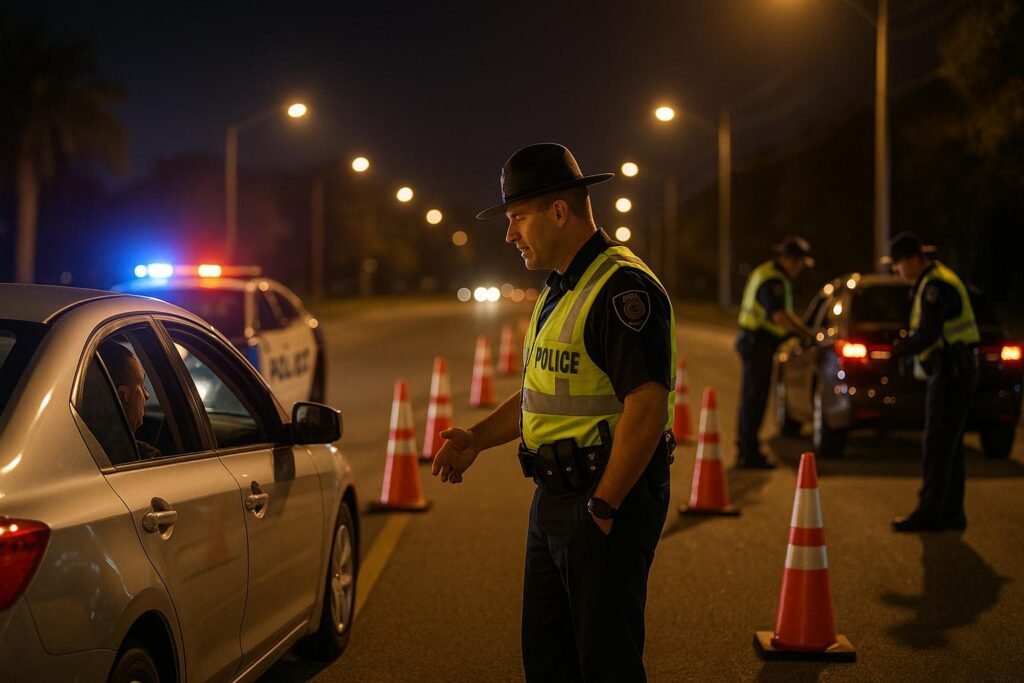
What Is a DUI Checkpoint in Florida?
A DUI checkpoint, also known as a sobriety checkpoint, is a predetermined location where law enforcement officers briefly stop vehicles to check for signs of impairment. Unlike traditional traffic stops, checkpoints do not require individualized suspicion for every driver. However, they must follow strict legal standards to remain constitutional.
Florida courts allow DUI checkpoints only when specific safeguards are in place. These safeguards are designed to balance public safety with individual rights under the Fourth Amendment.
Are DUI Checkpoints Legal in Florida?
Yes, DUI checkpoints are legal in Florida—but only if conducted properly. Courts have made it clear that checkpoints must meet established criteria, including:
- Advance planning by supervisory officers
- Neutral vehicle selection (such as stopping every third or fifth car)
- Minimal delay to drivers
- Clear signage and visible police presence
- A defined purpose related to roadway safety
If law enforcement fails to meet these requirements, the legality of the checkpoint may be challenged. This is where guidance from the best dui lawyer in fort pierce, fl is often considered by individuals facing DUI charges.
What Are Your Rights at a DUI Checkpoint?
Drivers stopped at a DUI checkpoint still retain important constitutional protections. Understanding these rights can help prevent unnecessary self-incrimination.
Key Rights Every Driver Should Know
- The right to remain silent beyond providing basic identification
- The right to refuse field sobriety exercises
- The right to decline vehicle searches without consent
- The right to ask whether the stop is voluntary
Officers may ask questions, but drivers are not required to answer beyond providing a driver’s license, registration, and proof of insurance. Any expansion of the stop must be supported by observable indicators of impairment.
Can a DUI Checkpoint Stop Turn Into an Arrest?
Yes, a checkpoint stop can lead to an arrest if an officer observes signs suggesting impairment. These signs may include slurred speech, bloodshot eyes, odor of alcohol, or inconsistent responses.
However, not every arrest made at a checkpoint is legally sound. Improper checkpoint setup, unlawful questioning, or invalid testing procedures may weaken the prosecution’s case. Consulting a dui defense attorney in fort pierce, fl can help determine whether constitutional violations occurred.
Field Sobriety and Breath Tests at Checkpoints
Field Sobriety Exercises
Field sobriety exercises are voluntary in Florida. Declining them cannot legally be used as evidence of guilt, although officers may still proceed with an arrest based on other observations.
Breath and Chemical Tests
Florida’s implied consent law applies after an arrest. Refusing a lawful breath or chemical test may carry administrative consequences, but the validity of the arrest itself can still be challenged. A thorough legal review may uncover procedural flaws or testing errors.
Common Legal Challenges to DUI Checkpoints
Several legal defenses may apply to DUI checkpoint arrests, depending on the circumstances. These defenses often focus on how the checkpoint was planned and conducted.
Potential Defense Strategies Include:
- Lack of proper supervisory approval
- Arbitrary or discriminatory vehicle selection
- Inadequate signage or visibility
- Excessive detention time
- Unlawful expansion of the stop
An experienced best dui lawyer in fort pierce, fl often evaluates these details to determine whether evidence may be suppressed or charges reduced.
How DUI Checkpoint Arrests Affect Drivers Long-Term
A DUI arrest can impact multiple areas of life beyond the courtroom. Employment background checks, professional licensing, insurance rates, and driving privileges may all be affected. Even first-time offenses can carry lasting consequences if not addressed strategically.
Because of these risks, many drivers choose to explore legal options early rather than waiting for the case to progress. Speaking with a dui defense attorney in fort pierce, fl may provide clarity on potential outcomes and next steps.
Why Local Experience Matters in DUI Checkpoint Cases
DUI checkpoint enforcement varies by jurisdiction. Local law enforcement practices, judicial expectations, and procedural norms can all influence how a case unfolds. This is why some individuals seek guidance from the best dui lawyer in fort pierce, fl, particularly when checkpoint legality or officer conduct is in question.
Local familiarity can help identify patterns, procedural shortcuts, or recurring issues that may not be obvious to those unfamiliar with the area.
When to Consider Legal Guidance After a DUI Checkpoint
Legal guidance is often considered when:
- Arrests occur at questionable checkpoints
- Rights may not have been clearly explained
- Testing procedures appear flawed
- Charges feel disproportionate to the situation
Even when a checkpoint appears lawful on the surface, a deeper legal review may reveal issues worth addressing. A single consultation with a criminal defense attorney in fort pierce, FL can help assess whether defenses exist.
Featured Snippet: Quick Answers About Florida DUI Checkpoints
Are DUI checkpoints legal in Florida?
Yes, but only when strict legal guidelines are followed.
Can drivers refuse sobriety tests at checkpoints?
Field sobriety exercises are voluntary; chemical tests follow implied consent rules.
Can DUI checkpoint cases be challenged?
Yes, especially if the checkpoint or arrest procedures were improper.
Frequently Asked Questions
1. Can drivers legally turn around to avoid a DUI checkpoint in Florida?
Yes, as long as the maneuver is legal and does not violate traffic laws. However, unsafe or illegal turns may provide officers with reasonable suspicion for a stop.
2. Do police have to announce DUI checkpoints in advance?
Florida law does not require public announcements, but courts often consider advance planning and transparency when evaluating legality.
3. What happens if a checkpoint does not follow proper procedures?
Evidence obtained during an unlawful checkpoint may be challenged, which could weaken or dismiss the case depending on the circumstances.
Speaking With a Local Legal Professional
Drivers facing DUI checkpoint-related charges often look for clear, practical guidance tailored to Fort Pierce and surrounding areas. For those seeking more information or wishing to discuss potential legal options, reaching out to a qualified legal professional may provide helpful direction.
Address: 130 S Indian River Dr, Suite 202, Office 218 Fort Pierce, FL 34950, United States
Phone: 772-828-1143
Email: matzar@bellsouth.net
This contact information is provided for individuals who wish to seek general guidance or discuss concerns related to DUI checkpoint matters in Fort Pierce.